Microsite
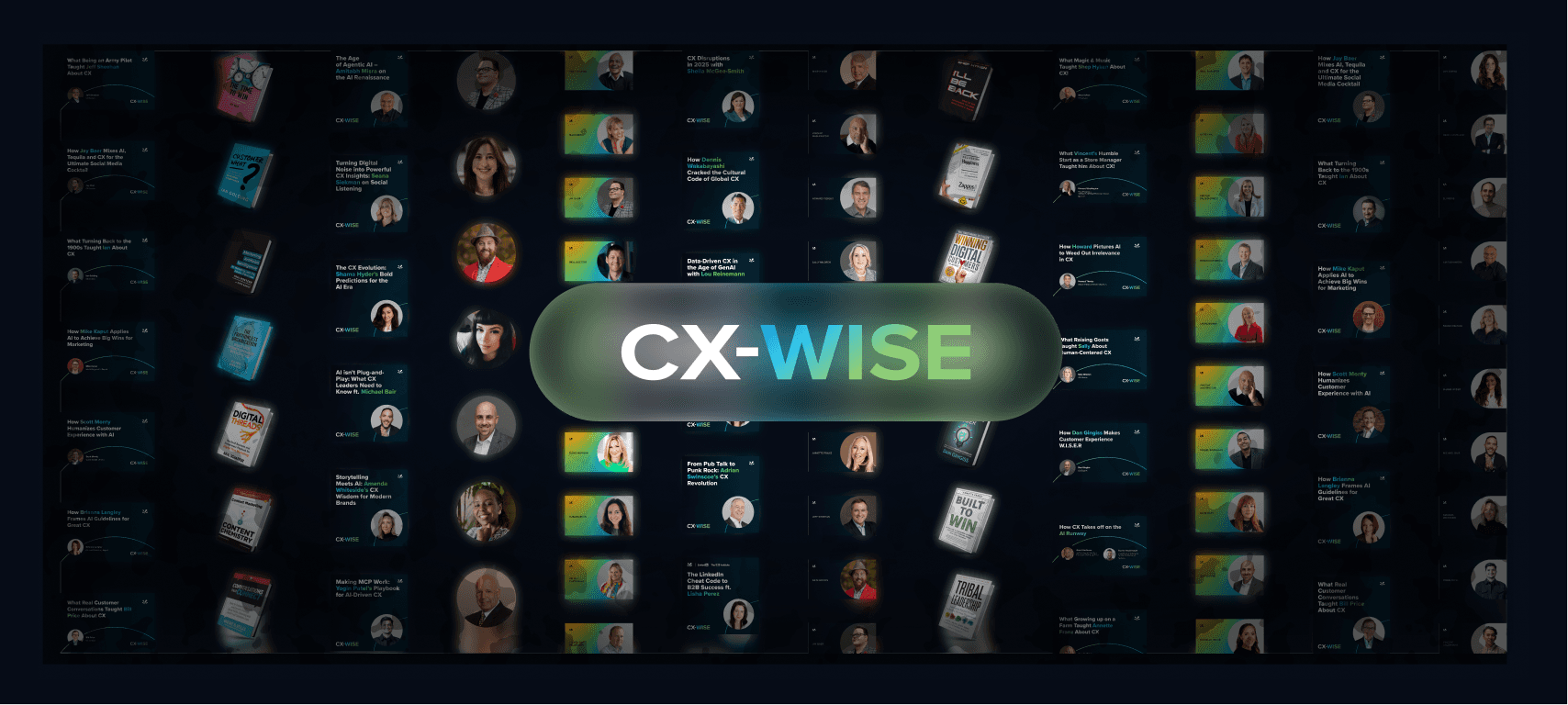
CX-wise
Unified Customer Experience Content Platform
Year :
2024
Industry :
Saas
Role :
UX Lead & Experience Architect
THE PROBLEM
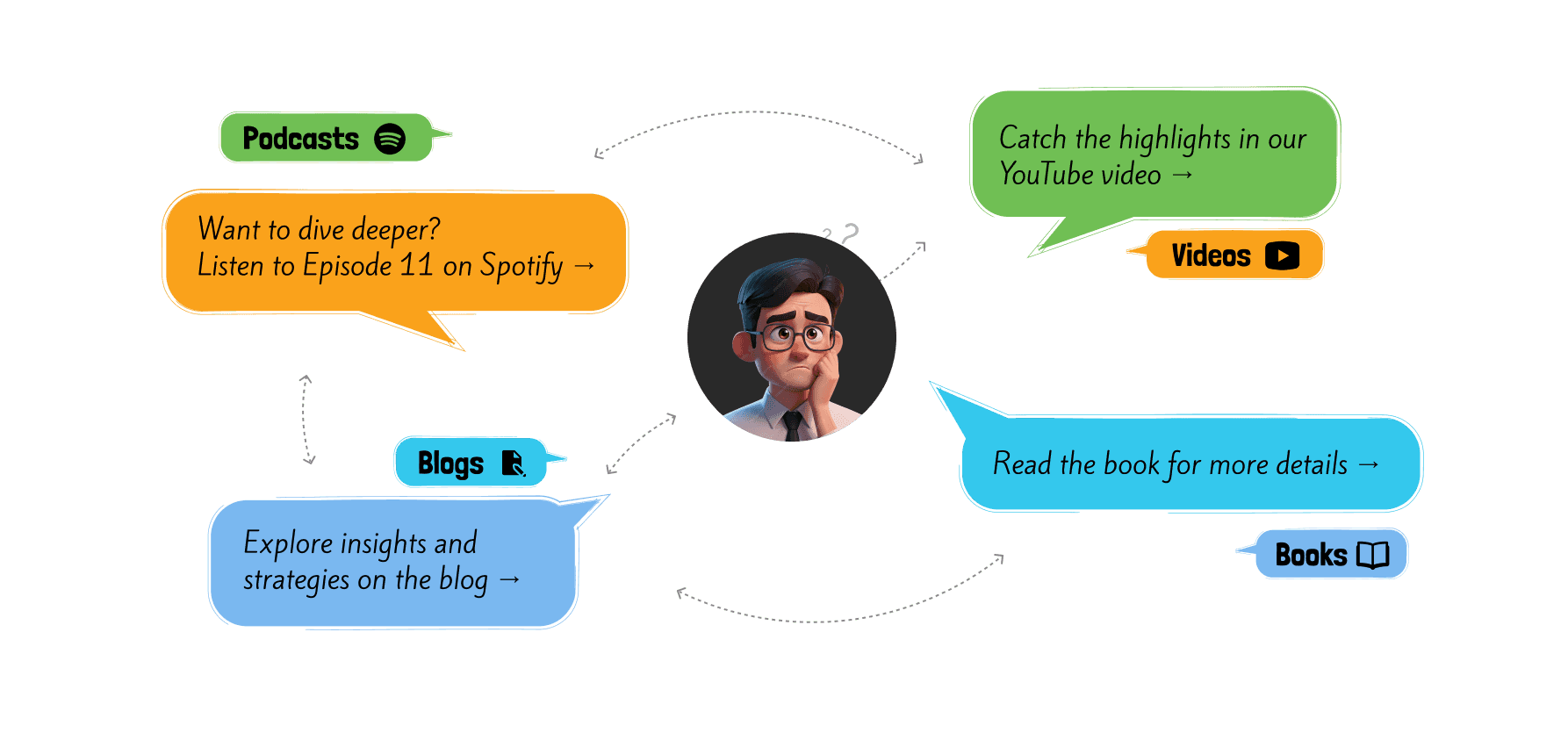
Sprinklr’s rich content engine lacked a standardized governance structure. Users faced severe friction points when navigating cross-format journeys (shifting between deep-dive articles, audio streams, and video content), resulting in steep bounce rates.Behind the scenes, the lack of a standardized interaction framework forced engineering and content creators to build bespoke layouts for every new launch. We weren’t just fixing typography and grids; we had to design a scalable framework for cross-departmental execution, layout clarity, and long-term platform velocity.
STRATEGIC EXECUTIVE ALIGNMENT
To guarantee buy-in for this platform shift, I led cross-functional alignment sessions between Product Management, Corporate Marketing, and Content Operations.By mapping UX milestones directly to corporate conversion goals, I transitioned the conversation from aesthetic preferences to measurable business objectives. I established localized feedback loops that allowed our core digital design team to prototype in lockstep with the content roadmap, eliminating upstream production delays.
Podcsts
Videos
Books
Articles
Cx-wise
MY ROLE
As a Product Designer and Systems Designer, I led the experience design effort, focusing on information architecture, UX strategy, and component-level systems thinking. My goal was to ensure that content, data, and user intent worked together seamlessly. I designed the unified content discovery system and search experience, ensuring that blogs, podcasts, and videos felt consistent in both presentation and interaction.
RESEARCH & INSIGHTS
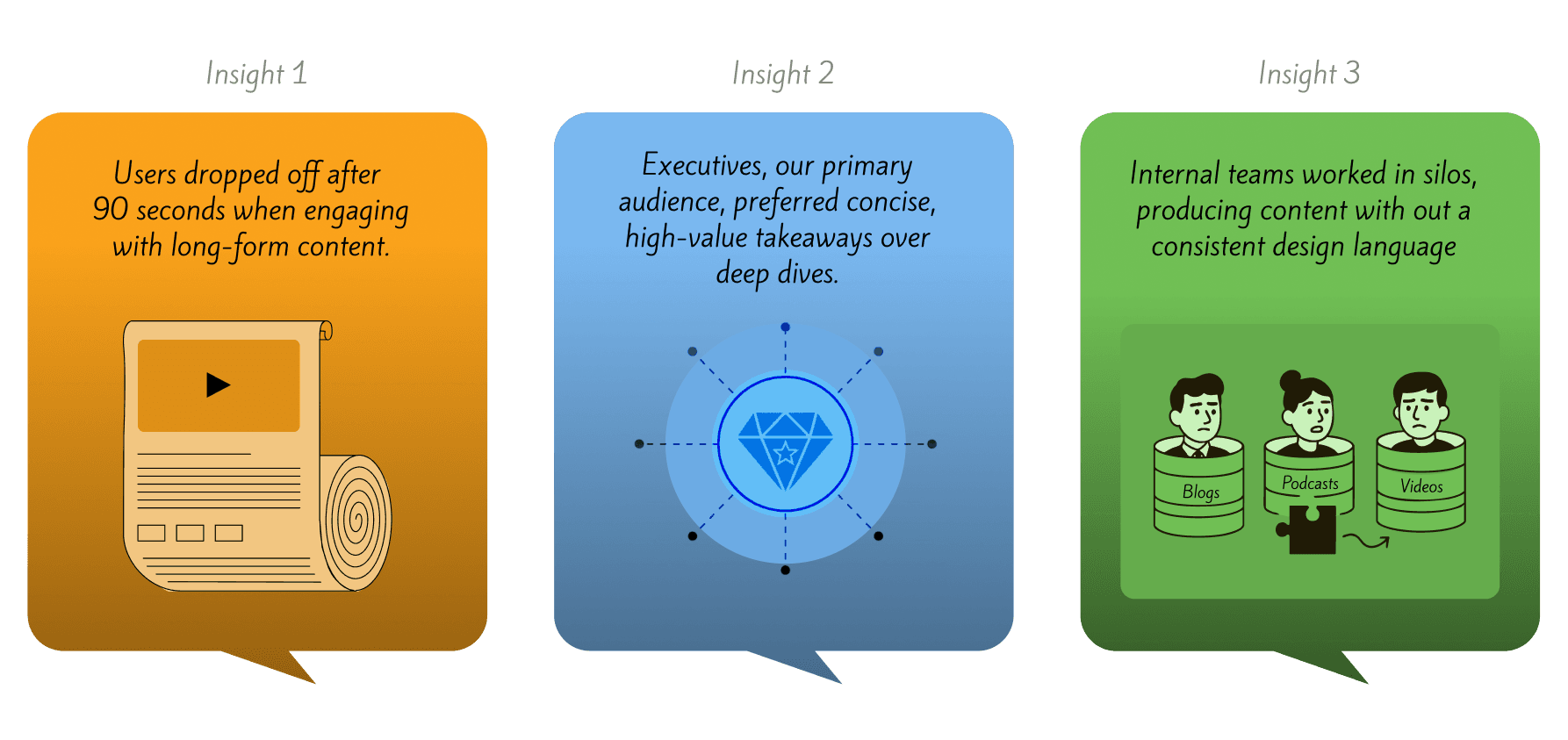
Before mapping the information architecture, we executed an intensive heuristic evaluation paired with quantitative user drop-off analysis. The data revealed critical operational boundaries:The 90-Second Retention Wall: Target B2B decision-makers and C-suite executives faced rapid cognitive fatigue, dropping off after 90 seconds of continuous long-form interaction.Siloed Asset Deployment: Internal marketing teams routinely produced large content files in isolation before assessing the container's structural layout boundaries—causing persistent engineering bottlenecks.Context Fragmentation: Users looking for a specific topic were forced to leave the main site ecosystem to consume related video or audio assets.
DESIGN STRATEGY
We neutralized systemic fragmentation by introducing a modular, system-first UI philosophy optimized for speed and human behavior:The Adaptive Component Framework: Designed and coded a unified, variable-driven card architecture. This singular master system dynamically adjusts to house articles, podcasts, or video frameworks without breaking layout constraints.Micro-Consumption Architecture: Built intuitive inline summary cards, quick-scallop data callouts, and 90-second snippet modules to match executive reading habits.Unified Graph Navigation & Filter Matrix: Created an advanced multi-faceted taxonomy index. Users can pivot across macro topics, content mediums, or specific formats instantly from a single window.DesignOps Synchronization: Deployed a design-first content assembly standard. We structured layout templates directly inside our shared libraries, empowering content authors to preview text boundaries against our components before pushing to production.
OUTCOME
The launch of CX-Wise successfully transformed Sprinklr's public-facing thought leadership while optimizing its internal content supply chain. By introducing strict design governance, we transformed scattered media elements into a unified, high-performing corporate asset.
%
%
%
REFLECTION
CX-Wise reminded me that great UX is about more than clean interfaces — it’s about respecting how people actually behave. Discovering that 90-second engagement drop-off was a wake-up call. It reinforced that empathy in design comes not from what users say, but from what they do. This project reshaped how I think about designing systems that serve both users and organizations at scale.